Biodiversity is the library of life: every species is a book, every gene a word, every ecosystem a story that we cannot afford to lose.
The most authoritative definition of biodiversity is contained in the Convention on Biological Diversity signed in Rio de Janeiro in 1992: biodiversity means "the variability among living organisms from all sources, including terrestrial, marine, and other aquatic ecosystems and the ecological complexes of which they are part; this includes diversity within species, between species and of ecosystems." In other words, we are not just talking about pandas, whales, or tropical forests, but about genes, ecological relationships, dynamic balances, that is, the deep structure of life.
What is biodiversity and why is it central to sustainable development?
In the strictest sense, biodiversity is a genetic concept. It is the variety of genetic heritage that distinguishes one population from another, one species from another, one individual from another. In the animal and plant world, this means resilience: the greater the genetic diversity, the greater the ability to adapt to environmental shocks, climate change, and new diseases. A field cultivated with a single variety is fragile; a complex ecosystem is robust. Nature does not favor monocultures, as they are efficient in the short term but unstable in the long term.
A planet that loses biodiversity does not only lose species. It loses options, evolutionary possibilities, future solutions to problems we do not yet know. Every extinct gene is information deleted forever. From a scientific point of view, this is an objective fact, not a romantic opinion. From an economic and social point of view, it is a reduction in the natural capital on which human development is based.
In the strictest sense, biodiversity is a genetic concept. It is the variety of genetic heritage that distinguishes one population from another, one species from another, one individual from another. In the animal and plant world, this means resilience: the greater the genetic diversity, the greater the ability to adapt to environmental shocks, climate change, and new diseases. A field cultivated with a single variety is fragile; a complex ecosystem is robust. Nature does not favor monocultures, as they are efficient in the short term but unstable in the long term.
A planet that loses biodiversity does not only lose species. It loses options, evolutionary possibilities, future solutions to problems we do not yet know. Every extinct gene is information deleted forever. From a scientific point of view, this is an objective fact, not a romantic opinion. From an economic and social point of view, it is a reduction in the natural capital on which human development is based.
How biodiversity strengthens the identity and competitiveness of territories
It must be said that biodiversity is not just a biological fact. It is also a cultural and territorial principle. Transferring the concept of biodiversity to territories means recognizing that each local context has a unique genetic, environmental, historical, and productive heritage. A territory that protects its biodiversity protects its identity. And a territory that loses biodiversity tends to become uniform, interchangeable, and therefore economically weaker.
Globalization has brought undoubted benefits in terms of trade, innovation, and access to markets. But when it translates into productive and cultural standardization, it can erode local specificities. Biodiversity, in this sense, represents the opposite of standardization. It is the enhancement of difference as a competitive advantage. Closure? We do not want to see it that way, but rather as an awareness of one's own distinctive value.
It must be said that biodiversity is not just a biological fact. It is also a cultural and territorial principle. Transferring the concept of biodiversity to territories means recognizing that each local context has a unique genetic, environmental, historical, and productive heritage. A territory that protects its biodiversity protects its identity. And a territory that loses biodiversity tends to become uniform, interchangeable, and therefore economically weaker.
Globalization has brought undoubted benefits in terms of trade, innovation, and access to markets. But when it translates into productive and cultural standardization, it can erode local specificities. Biodiversity, in this sense, represents the opposite of standardization. It is the enhancement of difference as a competitive advantage. Closure? We do not want to see it that way, but rather as an awareness of one's own distinctive value.
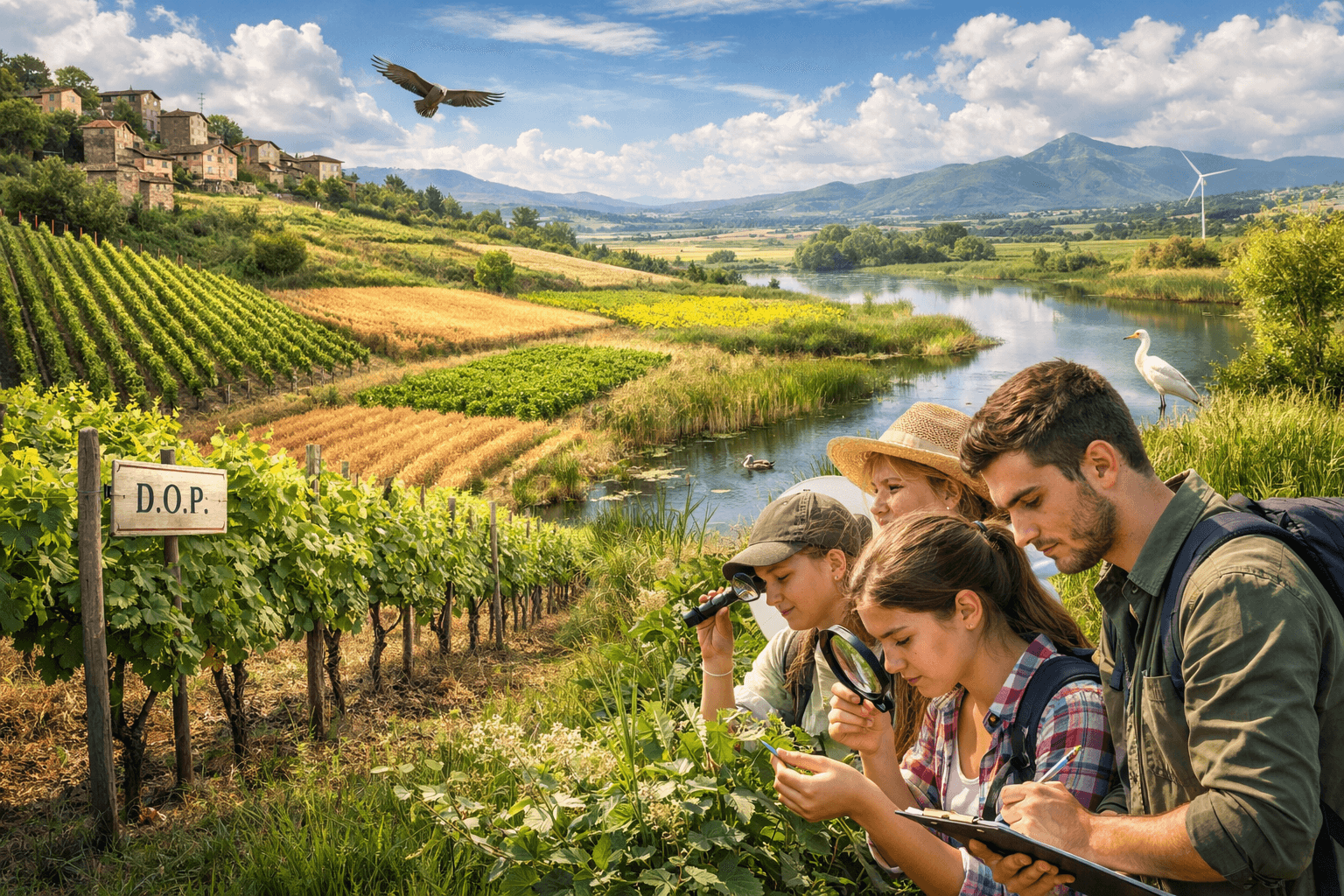
Let's consider the economies linked to agri-food biodiversity. Quality labels such as Protected Designation of Origin (PDO), Protected Geographical Indication (PGI), or Controlled and Guaranteed Designation of Origin (DOCG) are not simply commercial labels. Rather, they are tools that protect genetic, environmental, and cultural heritage. Behind a PDO there is a plant or animal variety selected over time, a specific microclimate, knowledge handed down through generations, and a community that preserves production practices.
The same reflection extends to the debate on biotechnology and GMOs. Genetic innovations can offer powerful tools for increasing productivity and resistance. However, the central issue remains the balance between innovation and the conservation of diversity. A strategy focused exclusively on genetic efficiency risks reducing overall variability. Science is not a dogma, it is a method: it observes, experiments, and evaluates impacts. The point is not to demonize or celebrate, but to govern responsibly. Genetic biodiversity is insurance for the future; every choice that reduces it must be weighed very carefully.
The same reflection extends to the debate on biotechnology and GMOs. Genetic innovations can offer powerful tools for increasing productivity and resistance. However, the central issue remains the balance between innovation and the conservation of diversity. A strategy focused exclusively on genetic efficiency risks reducing overall variability. Science is not a dogma, it is a method: it observes, experiments, and evaluates impacts. The point is not to demonize or celebrate, but to govern responsibly. Genetic biodiversity is insurance for the future; every choice that reduces it must be weighed very carefully.
Alongside genetic biodiversity, there is also cultural biodiversity. Human communities, like biological species, develop distinctive traits in relation to their environment. Agricultural traditions, local cuisines, rural architecture, cooperative models: all of these arise from the interaction between genetics and context. The diversity between populations is not only biological, it is also historical and environmental. It is the result of mutual adaptations between humans and their territory.
From this perspective, genetic biodiversity and cultural biodiversity reinforce each other. A territory that preserves native varieties, complex agricultural landscapes, and short supply chains also fuels a strong narrative of identity. And this identity becomes a lever for sustainable development in its three dimensions: environmental, economic, and social. Environmental, because it protects ecosystems. Economic, because it creates exclusive products that cannot be replicated elsewhere. Social, because it strengthens the sense of belonging and cohesion.
Biodiversity is therefore an exclusive advantage. Not in the sense of a closed privilege, but in the sense of irreplaceable uniqueness. In a global market, uniqueness is value. If everything is the same, everything is replaceable. If a territory is unique, it becomes attractive. This applies to agri-food products, sustainable tourism, crafts, and innovative supply chains linked to the bioeconomy.
From this perspective, genetic biodiversity and cultural biodiversity reinforce each other. A territory that preserves native varieties, complex agricultural landscapes, and short supply chains also fuels a strong narrative of identity. And this identity becomes a lever for sustainable development in its three dimensions: environmental, economic, and social. Environmental, because it protects ecosystems. Economic, because it creates exclusive products that cannot be replicated elsewhere. Social, because it strengthens the sense of belonging and cohesion.
Biodiversity is therefore an exclusive advantage. Not in the sense of a closed privilege, but in the sense of irreplaceable uniqueness. In a global market, uniqueness is value. If everything is the same, everything is replaceable. If a territory is unique, it becomes attractive. This applies to agri-food products, sustainable tourism, crafts, and innovative supply chains linked to the bioeconomy.
Genetic and cultural biodiversity: what role for young people and innovation?
This issue is particularly relevant for younger generations. Young people are, by definition, bearers of biological and cultural diversity: new skills, new sensibilities, new consumption models. Investing in biodiversity means investing in a model of human development that recognizes plurality as a source of wealth. This translates into developing interdisciplinary skills capable of integrating natural sciences, economics, law, and territorial governance.
The Statute of the Simone Cesaretti ETS Foundation focuses on promoting sustainable development based on the balance between humans and the environment. In this context, biodiversity is not a sectoral issue, but a conceptual cornerstone. It is the material and symbolic basis on which to build forward-looking public policies. Without biodiversity, there can be no lasting food security, no climate resilience, no true intergenerational justice.
This issue is particularly relevant for younger generations. Young people are, by definition, bearers of biological and cultural diversity: new skills, new sensibilities, new consumption models. Investing in biodiversity means investing in a model of human development that recognizes plurality as a source of wealth. This translates into developing interdisciplinary skills capable of integrating natural sciences, economics, law, and territorial governance.
The Statute of the Simone Cesaretti ETS Foundation focuses on promoting sustainable development based on the balance between humans and the environment. In this context, biodiversity is not a sectoral issue, but a conceptual cornerstone. It is the material and symbolic basis on which to build forward-looking public policies. Without biodiversity, there can be no lasting food security, no climate resilience, no true intergenerational justice.
Science tells us that we are experiencing a phase of drastic reduction in global biodiversity.
The rate of species extinction is significantly higher than the natural background rate. This is not a rhetorical alarm, but empirical data documented by decades of research. The question is not whether to act, but how to do so in a systemic way.
Integrated policies are needed: habitat protection, promotion of sustainable agriculture, support for local quality production, investment in responsible genetic research, widespread environmental education. A cultural change is also needed: recognizing that diversity, in nature as in societies, is not an obstacle to efficiency, but its condition of possibility in the long term.
Biodiversity teaches us a simple and radical lesson: life thrives on difference. Standardization may seem easier, but it is fragile. Diversification is more complex, but it is resilient. In an era of climate crises, geopolitical tensions, and accelerated technological transformations, resilience is the real currency of the future.
Protecting biodiversity means protecting the ability of the planet—and human communities—to reinvent themselves without collapsing. It is an ethical choice, of course. But it is also a strategic choice. Because in the great laboratory of Earth, variety is not a decorative detail: it is the very condition of life.
The rate of species extinction is significantly higher than the natural background rate. This is not a rhetorical alarm, but empirical data documented by decades of research. The question is not whether to act, but how to do so in a systemic way.
Integrated policies are needed: habitat protection, promotion of sustainable agriculture, support for local quality production, investment in responsible genetic research, widespread environmental education. A cultural change is also needed: recognizing that diversity, in nature as in societies, is not an obstacle to efficiency, but its condition of possibility in the long term.
Biodiversity teaches us a simple and radical lesson: life thrives on difference. Standardization may seem easier, but it is fragile. Diversification is more complex, but it is resilient. In an era of climate crises, geopolitical tensions, and accelerated technological transformations, resilience is the real currency of the future.
Protecting biodiversity means protecting the ability of the planet—and human communities—to reinvent themselves without collapsing. It is an ethical choice, of course. But it is also a strategic choice. Because in the great laboratory of Earth, variety is not a decorative detail: it is the very condition of life.